
Nearly 45% of recent homebuyers in a major U.S. survey made an offer on a property they had not seen in person, up from 28% a year earlier and 20% in July 2015 according to Redfin's market survey. That's the number that changes the conversation. Buying a house sight unseen is no longer a fringe move made only by investors with high risk tolerance. It's become a mainstream response to fast markets, long-distance relocations, and the simple fact that waiting to inspect in person can cost you the property.
In Sydney and Byron Bay, that pressure feels familiar. Interstate buyers, expats returning home, relocation buyers, and investors often need to assess, shortlist, and act without physically standing in the living room. The mistake is thinking this is just about trusting photos. It isn't. It's about building a remote buying process that replaces what your own senses would normally pick up.
That means better questions, sharper document review, tougher contract terms, and a live inspection method that exposes flaws instead of hiding them. Done properly, buying sight unseen can work. Done casually, it can leave you owning someone else's problem.
Table of Contents
- The New Normal Why Buyers Are Purchasing Property Remotely
- Understanding the High-Stakes Risks Involved
- Your Digital Due Diligence Blueprint
- Mastering the Virtual Inspection Process
- Contractual Clauses That Protect Your Purchase
- The Buyer's Agent Advantage in Sydney and Byron Bay
The New Normal Why Buyers Are Purchasing Property Remotely
Remote buying is no longer edge-case behaviour. It is a standard response to speed, distance, and limited supply in markets where good properties do not sit around waiting for interstate or overseas buyers to arrive.
In Sydney, I see it with relocating professionals who need to be settled before a new role starts, parents buying around school catchments, and expats trying to re-enter the market from abroad. In Byron Bay, the pattern is different but just as common. Buyers are often balancing distance, irregular inspection access, and competition from cash-ready purchasers who can act fast.
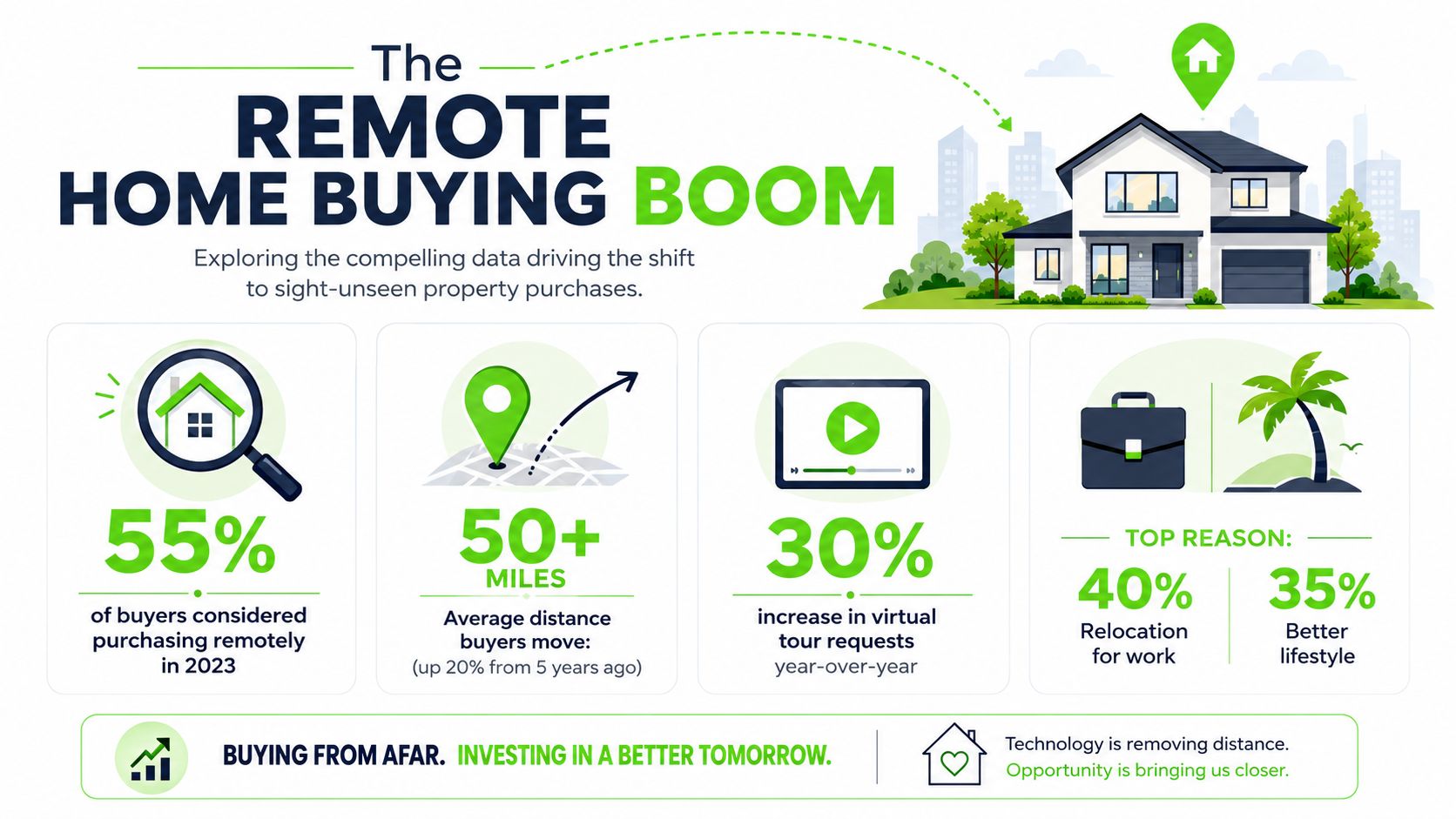
Buyers usually end up purchasing remotely for four practical reasons:
- Relocation deadlines: They need a principal place of residence secured before they land.
- Competition: Waiting for a weekend flight can mean missing the property.
- Travel friction: Repeated trips to regional or coastal markets are expensive and slow.
- Investment discipline: Some investors are focused on asset quality, yield position, and long-term resale more than the emotional feel of an inspection.
The pandemic accelerated this shift, but it did not create it from scratch. It forced buyers, agents, conveyancers, and brokers to get comfortable with video walkthroughs, digital contracts, remote identity checks, and faster document sharing. Those habits stuck because they solved a real market problem. Australian buyers were already competing across distance. The systems just caught up.
What has changed is access to information. A buyer can now review the contract, compare recent sales, inspect via live video, organise a building and pest report, and sign documents from another city or another country.
What has not changed is the risk.
A glossy online campaign still hides as much as it shows. A selling agent still represents the vendor. A property can still present well on screen and be poorly positioned on a busy road, back onto a noisy laneway, or carry renovation shortcuts that only show up when the right person asks the right questions. That is the gap most articles skip over. They say "do your due diligence" without showing how remote buyers should execute it under time pressure in a competitive market.
That execution piece matters more than the technology. Buying sight unseen can work well, but only if the process is built for verification rather than convenience. In practice, that means treating the remote purchase like a controlled acquisition. Get the documents early, inspect by live instruction rather than passive viewing, use local professionals who will give blunt feedback, and shape the contract so you still have room to act if the facts change.
Understanding the High-Stakes Risks Involved
The biggest mistake remote buyers make is treating the risk as visual. They focus on whether the kitchen looks dated or whether the lounge room feels smaller than expected. Those matter, but they aren't the expensive problems.
The harder risks sit in three buckets. Physical risk, location risk, and financial risk. There's also a fourth one that people underestimate, which is mismatch risk. That's when the property is technically acceptable but wrong for the way you live.
Physical risk
You can't smell damp through a screen. You can't feel a soft bathroom floorboard. You can't hear a rattling window seal unless someone deliberately stops and lets the microphone pick it up.
Remote-buying guidance increasingly puts the emphasis on due diligence periods, appraisal contingencies, and independent inspections rather than relying solely on virtual tours, as noted in Realtor.com's guidance on buying sight unseen. That shift is important. It tells you where practitioners see the main danger. Not in the photography. In what happens after an offer is accepted and the serious checking starts.
Physical risks often include:
- Hidden defects: Water ingress, structural movement, poor repairs, roof issues, or pest activity.
- Aging services: Plumbing, wiring, hot water systems, and drainage problems that don't show cleanly on camera.
- Short-term presentation fixes: Fresh paint over old damage, staged furniture hiding awkward proportions, or selective framing.
Location risk
Owner-occupiers are typically the ones who get caught. An investor may tolerate a plain outlook or nearby traffic if the fundamentals stack up. A family buying a principal place of residence may hate the same property once they arrive.
Location risk includes the things marketing material almost never captures well:
- Street noise
- Flight paths
- Late-night activity
- Neighbour presentation
- Future development nearby
- Difficult parking or traffic flow
Practical rule: If the issue exists outside the boundary line, the listing is less likely to show it honestly.
Financial risk and the true risk math
The contract and the numbers matter more than the polished video. A sight-unseen buyer can overpay if they rely on the asking guide without doing proper comparable sales work. They can also run into valuation issues after signing, especially if the market is moving quickly or the property has features that don't translate cleanly into lender value.
The true risk math is simple. The upside is speed and access. The downside is buying a compromised asset, then spending months and money trying to fix a decision that should have been challenged before exchange.
That doesn't mean you should avoid remote purchases. It means you should price uncertainty correctly. The less certainty you have about condition, street context, strata dynamics, or planning issues, the more protection you need elsewhere.
Your Digital Due Diligence Blueprint
Good remote buying starts with documents, not emotion. If the first thing you do is watch the glossy video, the property already has an advantage over you. Start instead with the information that doesn't care whether the stone benchtop looks good on Instagram.
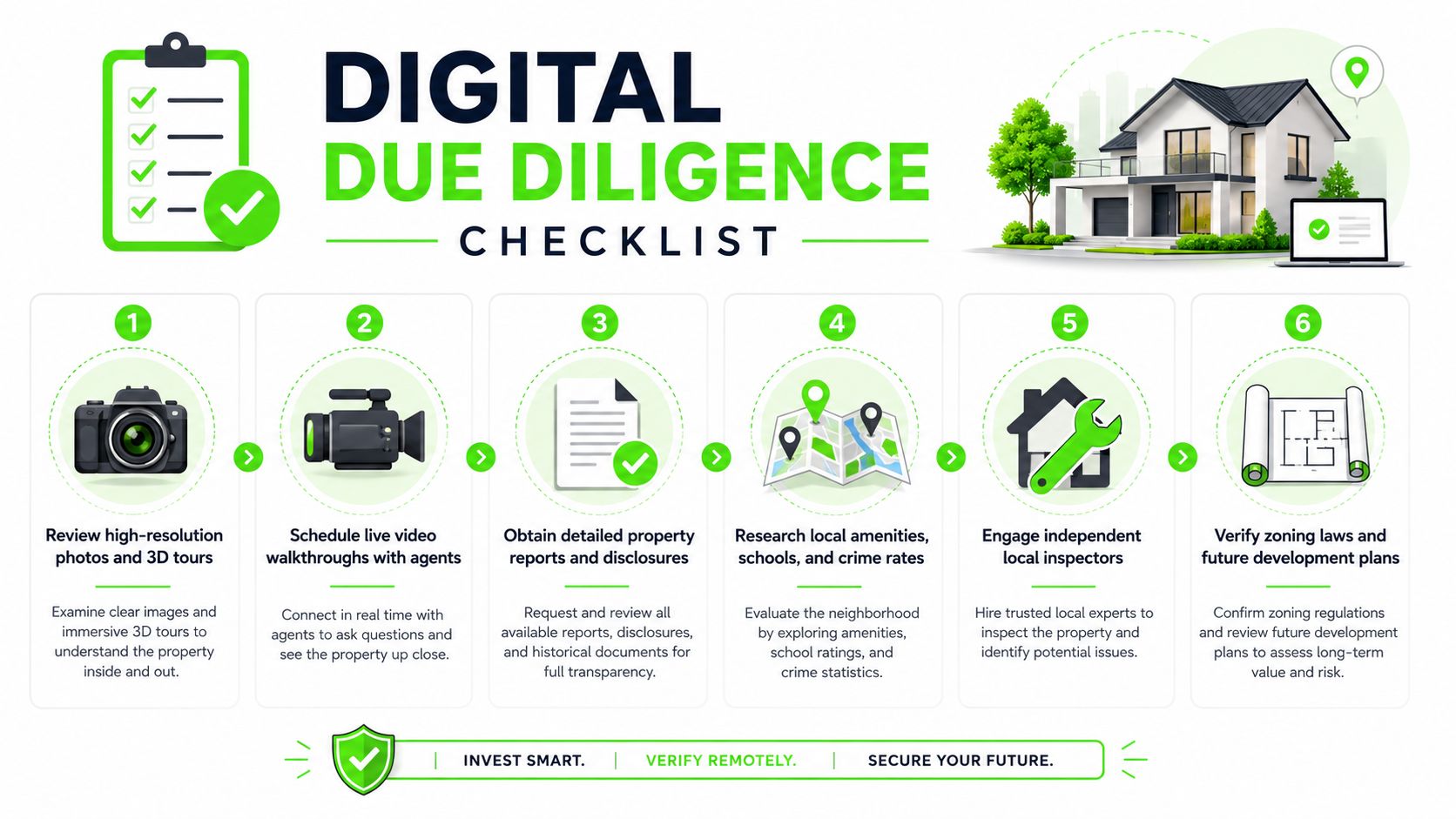
Start with documents before emotion
Ask for the contract of sale early. For a house, review title details, easements, covenants, sewer diagrams, and any planning constraints that could affect use or future improvements. For a strata property, the strata records often tell a more useful story than the photos do. You're looking for special levies, repeated defect discussions, water penetration disputes, combustible cladding concerns, lift issues, and whether the owners corporation is functioning sensibly.
Then line up independent building and pest reporting. If you're used to UK terminology, this overview of what is a RICS survey is a useful comparison point because it shows how structured condition reporting works in another market. In Australia, the local equivalent is making sure you have a proper building and pest process that goes beyond a quick tick-box summary.
A remote buyer should also review past sales, nearby comparables, and whatever planning information is publicly available. If you want to understand how title history and related public records fit into a broader search process, this guide on property search tax records is a useful starting point.
Build a remote suburb file
The suburb check needs to be as disciplined as the property check. Don't just scan a map and assume proximity equals convenience. In Sydney especially, a location can look close to transport or the beach while feeling completely different on the ground.
Build a file that includes:
- Council planning checks: Look for nearby development applications, road works, or major changes to adjoining sites.
- Street context review: Use map tools and recent imagery, then confirm with someone on the ground because older captures can hide current reality.
- Amenity fit: Walkability, access to shops, schools, parks, and the practical route you'd take.
- Local friction points: Busy corners, pub noise, school pick-up congestion, loading docks, and rat runs.
The best remote buyers don't try to recreate an in-person inspection perfectly. They break the decision into separate evidence streams and test each one.
Pre-Purchase Due Diligence Checklist
| Check Item | What to Look For |
|---|---|
| Contract of sale | Easements, restrictions, unusual clauses, inclusions, zoning references |
| Building and pest report | Structural movement, moisture, termite history, drainage, roof condition |
| Strata records | Levies, defect history, litigation, recurring maintenance, meeting disputes |
| Comparable sales | True local comparables, not optimistic agent framing |
| Council and planning review | Nearby development, overshadowing risk, road changes, land-use shifts |
| Disclosure material | Consistency between what's disclosed, advertised, and physically shown |
| Permit and renovation history | Signs that additions or alterations may not align with approvals |
| Neighbourhood review | Noise sources, adjoining properties, traffic patterns, day-to-day liveability |
How to interpret red flags remotely
A single issue doesn't always kill a deal. Patterns do.
If the strata minutes mention moisture repeatedly, the building report notes staining, and the selling agent glosses over ventilation, treat that as one risk story, not three separate minor issues. If the house presents beautifully but the fence line, drainage, and underfloor area are skipped during the tour, don't assume oversight. Ask for those areas to be shown specifically.
The practical advantage of digital due diligence is that you can review documents slowly and compare properties side by side. The practical disadvantage is that many buyers mistake available information for reliable information. They are not the same thing.
Mastering the Virtual Inspection Process
A live walkthrough is where remote buying either becomes disciplined or turns into theatre. Pre-recorded marketing videos are useful for layout and style. They are poor tools for testing problems. What you need is a controlled inspection where the person on site follows your instructions, moves at your pace, and shows the bits nobody normally films.
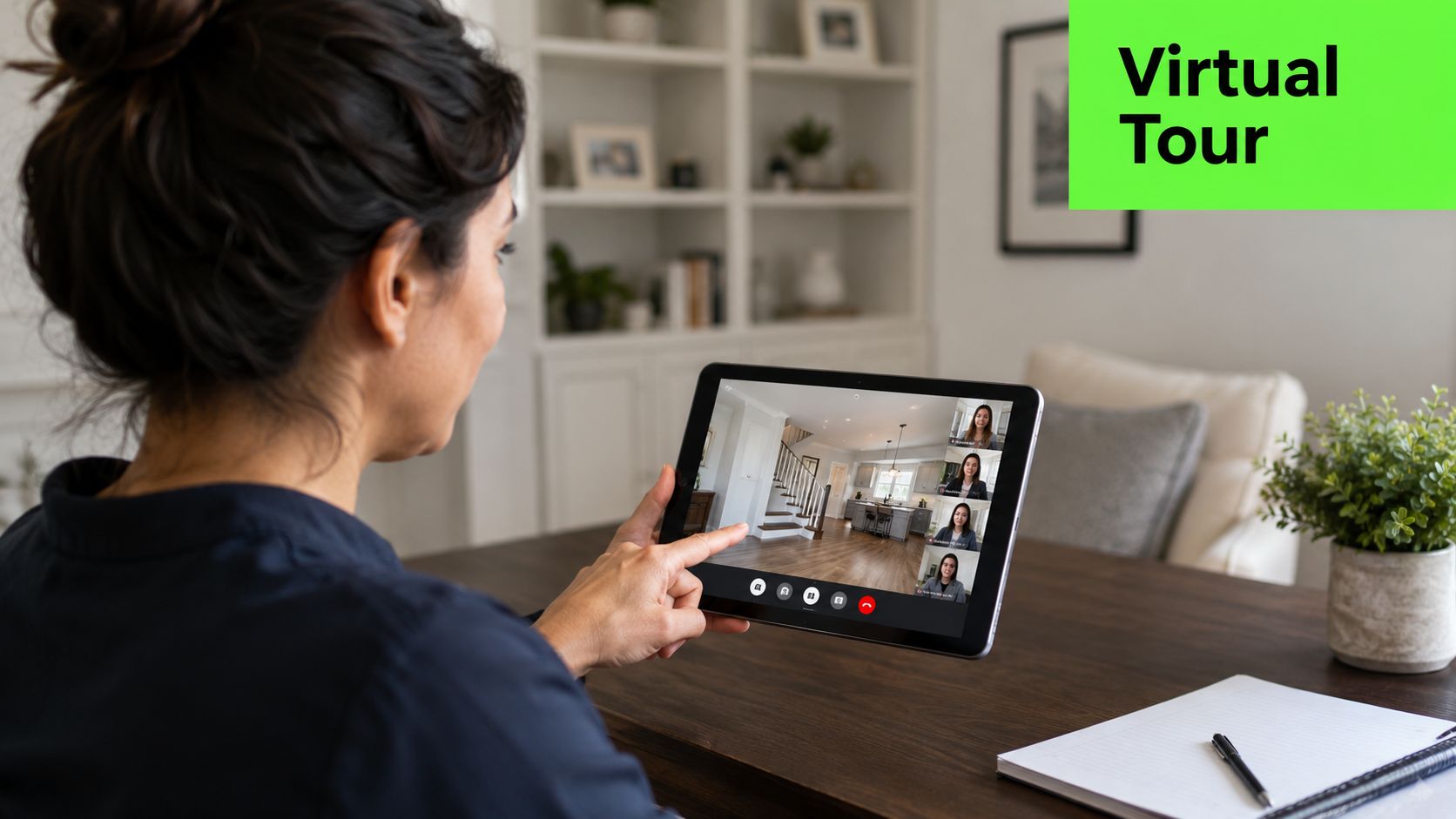
Authoritative guidance on sight-unseen buying stresses that the live video walkthrough should deliberately include problem areas, surrounding noise, and neighbouring properties, because polished virtual tours can miss important defects and context, as explained in Rocket Mortgage's walkthrough advice. That principle translates perfectly to Australian buying conditions.
How to run the live walkthrough
Set rules before the call starts. Ask for the walkthrough at a time when the property and street are likely to reveal something useful, not when it suits the selling campaign. Request that the person filming move slowly, hold the phone level, and stop talking when you need to listen.
Direct the inspection room by room:
- At the entry: Pan across the street, kerb, neighbouring homes, bins, parked cars, and the front boundary.
- In each room: Stand in each corner, then hold on the ceiling, cornices, skirting boards, window frames, and flooring transitions.
- In wet areas: Zoom into grout lines, vanity bases, silicone edges, exhaust fans, and any swelling in joinery.
- At windows and doors: Open and close them. Watch for sticking, gaps, or signs of movement.
- Outside: Show drainage falls, retaining walls, fences, roofline from ground view, subfloor access if available, and any cracking.
If the property includes a 3D tour, understanding what that format does well can help you use it properly. This 3D Matterport virtual tour guide is helpful because it explains how those scans present space and where they can still flatten or soften real-world condition cues.
What polished tours miss
Ask the person on site to stop and stay quiet. Then listen.
You're listening for traffic, dogs, construction, aircraft, neighbours, common-area noise in units, and how much sound comes through closed windows. Then ask them to step onto the balcony, into the rear yard, or into the common corridor and repeat the process.
Later in the process, pair that with a proper building and pest inspection so the visual tour isn't carrying more weight than it should.
A useful video example of remote inspection thinking is below. Watch how much better the process becomes when the buyer controls the pace rather than passively consuming the tour.
Questions that uncover the truth
Don't ask, “Does it look good?” Ask questions that force specifics.
- What can you smell right now?
- What can you hear with the windows shut?
- Show me the least attractive part of the property.
- What's directly over that back fence?
- Open the cupboard under every sink.
- Show me the laundry floor and the base of the shower screen.
- Stand at bench height so I can judge outlook and privacy.
If a seller's representative keeps steering the camera back to styling features, pull the inspection back to condition, boundaries, and noise. That's where remote buyers protect themselves.
Contractual Clauses That Protect Your Purchase
The contract is your real safety system. Buyers spend too much energy trying to perfect the visual side of a remote purchase and not enough on the terms that let them exit, renegotiate, or slow the transaction if the facts turn against them.
Authoritative buyer guidance consistently recommends an inspection contingency as essential, plus appraisal and financing contingencies, because the buyer is relying on secondhand information and can otherwise be locked into the deal before confirming condition or value, as outlined in FastExpert's buyer guidance. The language differs across jurisdictions, but the principle is the same in Australia. Your protection sits in the conditions you negotiate before you're committed.
The clauses that matter most
For Australian buyers, the common protections usually include:
- Subject to finance: Essential if lending approval is still being finalised or if valuation risk could affect the bank's position.
- Subject to building and pest inspection: This gives you a legitimate basis to investigate hidden condition issues.
- Due diligence or satisfactory inspection wording: Particularly useful where you need a broader review of documents, strata, planning, and physical condition.
- Subject to sale or settlement alignment clauses: Relevant in some chains, though they can weaken competitiveness depending on the seller's priorities.
The exact wording matters. A vague clause is only comforting until someone tries to rely on it. Buyers should have a solicitor or conveyancer draft or review the special conditions so the right to terminate or renegotiate is enforceable.
Why cooling-off is not enough
Many buyers assume a cooling-off period solves the problem. It often doesn't.
Cooling-off can be short, limited, or unavailable in particular circumstances. It also doesn't replace the need for a clear inspection right, enough time to review strata records properly, or a finance condition where lender approval remains uncertain. In auction settings, the risks are greater again because the usual post-offer protections may not exist once the hammer falls.
That's why serious remote buyers treat the contract like a risk-allocation document, not just paperwork that follows the inspection. If you're buying a house sight unseen, legal optionality is worth more than cosmetic confidence.
The Buyer's Agent Advantage in Sydney and Byron Bay
Remote buyers usually lose money in one of three places: they overpay, they miss a physical issue the photos concealed, or they buy into the wrong pocket of a suburb. A good buyer's agent reduces all three risks by acting as your eyes, ears, and negotiator on the ground.
In Sydney, that often means reading through the sales campaign and testing the actual position of the property. In Byron Bay, it often means something different. The house might suit the brief on paper, but the street, surrounding uses, exposure, access, or holiday-rental context can change the decision fast once someone local walks it properly.

A buyer's agent earns their fee when they replace guesswork with evidence. That means more than attending an inspection and sending a few photos. It means checking whether the floorplan works in real life, whether traffic noise carries into the rear bedrooms, whether the outlook has been framed to hide a drawback, whether the quoted range is vendor-conditioning or a realistic buy level, and whether the property still stacks up once the emotion is stripped out.
Sydney buyers need that because small differences in aspect, street position, strata quality, and school catchment can move value sharply. Byron Bay buyers need it because micro-location matters just as much as the dwelling. Two properties with similar online presentation can offer very different living outcomes depending on walkability, privacy, tourist flow, flood exposure, and future use constraints.
The practical jobs a buyer's agent handles remotely are straightforward, but they need to be done well:
- Cull hard and early: Rule out stock that looks acceptable online but fails on position, layout, noise, condition, or price expectations.
- Inspect with a buyer brief: Test the property against your actual priorities, not the selling agent's script.
- Pressure-test value: Compare recent sales, campaign tactics, and likely competition so you do not bid off an inflated guide.
- Coordinate the right specialists: Building and pest, strata review, contract advice, planning checks, and local council enquiries where needed.
- Negotiate and execute: Put forward terms, manage timing, and represent you in private treaty or at auction if you cannot attend.
For relocation buyers, the main problem is often lifestyle mismatch rather than structural failure. The property can be sound and still be wrong for how you want to live. For investors, the bigger risk is paying retail for a property with hidden downside in condition, rentability, or resale appeal. Local representation helps in both cases because someone is judging the asset in context, not through edited marketing.
That is especially relevant in lifestyle markets where interstate buyers can mistake brand recognition for suitability. Buyers comparing coastal properties from afar usually need suburb-by-suburb and street-by-street judgement, not generic advice. This guide for Byron Bay relocation buyers inspecting and comparing properties remotely shows the level of comparison work serious remote buyers should expect.
Used properly, a buyer's agent does not make a sight unseen purchase feel safer by talking it up. They make it safer by verifying the parts that photos, agent copy, and short video walkthroughs leave out.
If you're considering a remote purchase in Sydney or Byron Bay, We Are Buyers Agents provides on-the-ground property search, inspection, negotiation, and purchase representation for buyers who can't be there in person.