
You're weighing the kind of trade-off that shapes everyday family life. One suburb might offer stronger school options, another might cut an hour from your weekly commute, and a third might give your children more space to play without stretching the budget to breaking point. That is why so many lists about the best places to live in Australia for families feel incomplete. They name attractive suburbs, but they often miss the practical filters families use once the inspection is over and real life begins.
The city-level picture provides a useful starting point. Brisbane, Sydney, Melbourne and Perth all come up in family-location discussions for different reasons, but city rankings only get you to the first checkpoint. Choosing a family suburb works more like checking a house floor plan than reading the sales headline. You need to see how the pieces connect: school access, parks, transport, weekend errands, road noise, and whether the purchase price still leaves room for school fees, sport, or childcare.
School catchments often shape that decision faster than buyers expect. If that is one of your main filters, it helps to review how school zones and enrolment options work in Sydney before you compare suburbs side by side.
This guide focuses on places that keep appearing on family shortlists because they offer a workable mix of liveability and day-to-day practicality, not just prestige. Some are high-cost blue-chip suburbs. Others appeal because they balance access, character, and routine family convenience in ways many roundups skip.
Table of Contents
- 1. Mosman, Sydney NSW
- 2. Neutral Bay, Sydney NSW
- 3. Castlecrag, Sydney NSW
- 4. Balwyn, Melbourne VIC
- 5. Bangalow, Byron Bay NSW
- 6. South Yarra, Melbourne VIC
- 7. Cremorne, Sydney NSW
- 8. Asheville, Brisbane QLD
- 9. Coogee, Sydney NSW
- 10. Hawthorn East, Melbourne VIC
- Top 10 Family-Friendly Suburbs Comparison
- Final Thoughts
1. Mosman, Sydney NSW
Mosman keeps showing up in family conversations for a simple reason. It gives buyers the rare Sydney combination of harbour access, established streets, respected schools, and a suburban feel without cutting you off from the city. For parents who want weekend beaches, ferry rides, and a short list of reliable local amenities, it's easy to see the appeal.
A common buyer profile here is the family moving from a smaller inner-city apartment into a long-term house. They're not only buying bedrooms. They're buying routine. School drop-offs become easier, outdoor time is built into the week, and the suburb already has the kind of reputation that helps with resale when family needs change later.
Why families keep shortlisting Mosman
One smart filter is school access first, house second. If you're comparing two similar homes, the one with simpler access to education usually keeps broader appeal over time. For this reason, a suburb-level school map matters more than a glossy listing description. A useful starting point is this guide to schools in Sydney for buyers planning around family decisions.
Before you buy, check these details in person:
- Morning traffic flow: Drive the school route during actual drop-off hours.
- Walkability for kids: Footpaths, crossings, hills, and shade all matter more than a map suggests.
- House adaptability: A character home may suit a family better if it has space to extend, rework, or open up the backyard.
A harbour view is valuable, but for many families the winning feature is a house that makes weekdays easier.
Later in the search, many buyers realise Mosman isn't only about prestige. It's about reducing friction in day-to-day life.
A video walk-through helps show the suburb's rhythm better than photos alone.
2. Neutral Bay, Sydney NSW
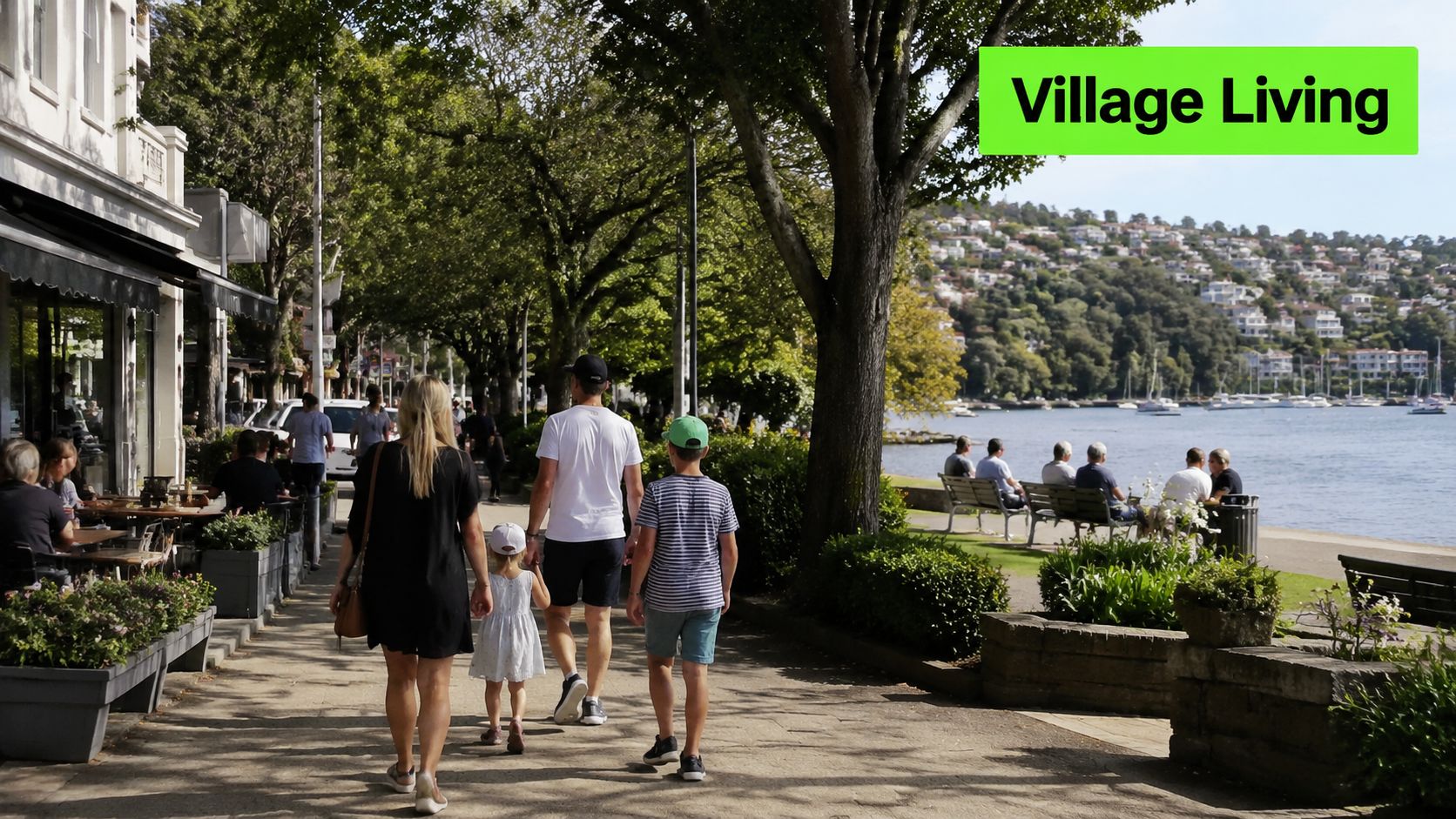
Some families like Mosman's position but want something a little more compact, more village-oriented, and often easier to enter. Neutral Bay fits that brief well. It feels active without feeling chaotic, and that balance matters when you've got young children, prams, after-school pickups, and parents commuting in different directions.
The suburb suits buyers who don't need a large block immediately. A townhouse or family-scaled apartment can make sense here, especially for households still in the early years of parenting. You can stay close to parks, cafes, local shopping, and transport without sacrificing too much convenience.
A practical fit for younger families
Neutral Bay often works best when buyers focus less on status and more on floor plan efficiency. A well-laid-out townhouse near the village can outperform a larger but awkward home farther away from daily essentials. For families, that means less time in the car and more flexibility once kids start activities and school.
Think about the suburb in terms of routine:
- Weekday convenience: Can one parent do daycare drop-off and still reach work without stress?
- Local independence: As kids get older, can they walk short distances safely with supervision?
- Housing flexibility: Could the property handle a second child, a work-from-home setup, or visiting grandparents?
Neutral Bay also attracts buyers who want the North Shore feel without going too far from the CBD. That's a real advantage if your household depends on city access but doesn't want full inner-city intensity.
3. Castlecrag, Sydney NSW
Castlecrag appeals to a different kind of family buyer. People don't usually choose it by accident. They choose it because they want quiet streets, greenery, privacy, and homes with personality. If a family has spent years in a high-turnover suburb and wants a calmer long-term base, Castlecrag often becomes more attractive the closer they look.
The built environment matters here. Houses tend to feel more individual, blocks often offer more separation from neighbours, and the suburb rewards buyers who value the natural environment and architecture, not just postcode recognition.
What makes Castlecrag different
A practical example is the renovation-minded family. They might buy a home with strong bones, good natural light, and enough land to improve over time rather than stretch for a fully updated property. In a suburb like Castlecrag, that strategy can make sense because the setting itself does a lot of the heavy lifting.
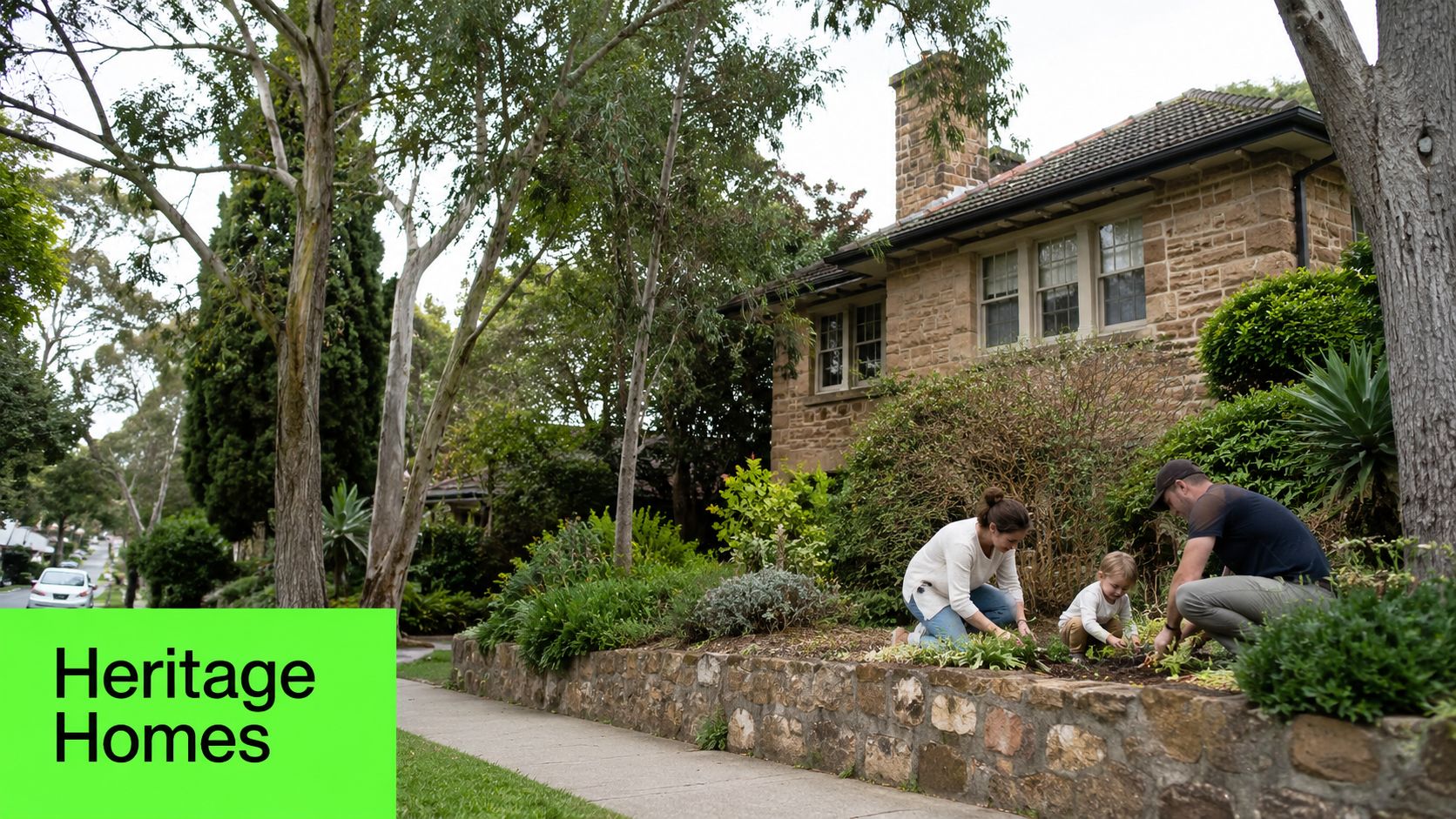
Before buying in heritage-sensitive areas, slow down and verify the basics.
Practical rule: If you're counting on renovations, confirm heritage constraints before you fall in love with the floor plan.
Castlecrag suits families who want home life to feel quieter and more residential. It's less about being seen and more about enjoying where you live.
4. Balwyn, Melbourne VIC
In Melbourne, Balwyn remains one of the clearest examples of a school-driven family suburb. Buyers often start with education goals and then narrow down housing options from there. That changes the search entirely. Instead of asking, “What's the nicest house we can buy?” they ask, “Which location gives our family the strongest daily setup over the next decade?”
That's one reason Balwyn continues to attract established households. Streets are leafy, housing stock is typically family-scaled, and the suburb has the kind of infrastructure that supports long stays rather than quick moves.
Why school-led buyers like Balwyn
A family moving from an inner apartment into Balwyn usually isn't chasing nightlife or trend value. They want a better study environment, more outdoor room, and a suburb where schooling options play a central role in purchase decisions. In that context, catchment knowledge matters.
If you're evaluating this part of Melbourne, it helps to understand how local strategy and negotiation can shape the result. This explains why buyers agents matter for Melbourne homebuyers in school-focused suburbs.
A good Balwyn search often comes down to trade-offs:
- Catchment versus house size: A smaller home in the right location may outperform a larger one outside the preferred area.
- Renovated versus adaptable: A dated house with a workable layout can still be the stronger long-term family asset.
- Park access versus main-road exposure: Inspect the street at different times, not just on a Saturday morning.
For many buyers, Balwyn isn't exciting in a flashy way. It's appealing because it tends to make sense.
5. Bangalow, Byron Bay NSW
Not every family wants capital-city structure. Some want more breathing room, a stronger sense of local community, and a lifestyle that feels less compressed. Bangalow stands out for buyers who like the Byron Bay region but don't want to live in the middle of its busiest coastal activity.
A realistic Bangalow buyer might be a Sydney family with partial remote work, school-age kids, and a plan to stay put for years. They still care about amenities, but they want their children to grow up with more open space and a more grounded day-to-day rhythm.
Village life with daily practicality
Bangalow works best when buyers assess it as a living town, not just a lifestyle postcard. Check road links, internet reliability, school run practicality, and the way the town functions outside holiday periods. Those details decide whether a move feels sustainable.
For relocation buyers, inspection discipline matters because homes can look very different online and in person. This guide on using a buyers agent in Byron Bay for relocation buyers is useful if you're comparing regional options remotely.
Bangalow tends to suit families who want:
- Community visibility: Kids become part of a recognisable local routine.
- Land and flexibility: A yard, a studio, or room for hobbies often matters more than a polished designer finish.
- Access to the coast without living on top of it: You can enjoy the region while avoiding some of the pressure of busier beachside pockets.
That combination is why Bangalow often stays on shortlists longer than buyers expect.
6. South Yarra, Melbourne VIC
South Yarra doesn't fit the old stereotype of a family suburb, but that's exactly why it deserves a closer look. Some households don't want to leave inner Melbourne once children arrive. They want parks, schools, culture, and transport, but still want to walk to shops, cafes, and daily services.
For the right buyer, South Yarra can work well. A renovated period home on a quieter street gives a different family experience from a small inner-city apartment, even though both sit inside a highly urban area. The key is choosing the micro-location carefully.
Inner-city family living that can work
This suburb often suits dual-professional households who value time efficiency. If both parents work in or near the city, cutting commute stress can be worth as much as gaining another room farther out. That's especially true in the early school years, when logistics pile up quickly.
Look closely at the pocket you're buying into:
- Park access: Small children need easy outdoor options, not just occasional destination parks.
- Noise profile: Visit during evenings and weekends, not only business hours.
- Property type: Some apartments work for young families, but storage, pram access, and layout need close scrutiny.
South Yarra won't suit everyone searching for the best places to live in Australia for families. But for buyers who want urban energy without giving up family function, it can be a very smart compromise.
7. Cremorne, Sydney NSW
Cremorne often appeals to families who want Sydney convenience but don't want to feel like they're living in a transient, purely investor-led precinct. It has a more settled tone than some dense urban locations, while still keeping schools, transport, shops, and cultural options within easy reach.
That mix becomes more valuable once children start school and weekends get busier. Parents begin to care less about headline glamour and more about whether a suburb supports a repeatable routine.
A suburb for families who want convenience
A practical example is the family who spends years renting nearby, then buys in Cremorne to stay close to familiar services. They already know where they like to shop, which parks are suitable for children, and what traffic feels like on a school morning. That local knowledge often leads to better purchase decisions than chasing the “next hot suburb.”
The best homes here usually balance three things well:
- Quiet street position: Families notice traffic and noise quickly after moving in.
- Usable indoor-outdoor flow: A modest courtyard can matter more than a formal dining room.
- School and bus access: A shorter, simpler trip often wins over a technically larger home.
Cremorne tends to reward buyers who inspect with a family lens. Stand at the front gate and ask what life would feel like on a Tuesday, not just on settlement day.
8. Asheville, Brisbane QLD
A family weighing Brisbane often reaches the same point in the search. The city looks attractive on paper, but the core question is narrower. Which suburb provides enough room, a workable school run, and a house you can stay in for years?
That is why Asheville needs to be judged as a suburb, not as shorthand for Brisbane in general.
For families, Asheville's appeal usually comes down to the parts of daily life that are easy to miss in a broad city ranking. Street quiet matters when children are learning to ride bikes. Block size matters when a small backyard saves you from relying on public parks every afternoon. The distance between home, school, shops, and sport matters because a suburb that looks fine on Saturday can feel very different on a rushed Wednesday.
Why families may shortlist Asheville
Asheville can suit buyers who want Brisbane access without paying for a more tightly packed inner-city lifestyle. A practical way to assess it is to treat the suburb like a weekly timetable. If one parent needs a manageable commute, the children need straightforward school access, and the household wants space for storage, outdoor play, or future renovations, then value is not just about purchase price. It is about how long the home can keep working as the family changes.
Cost comparisons also shape this decision. A relocation guide from PSS International Removals notes that Sydney families may need about AUD 10,821 per month, while Adelaide is described at AUD 2,200 to 2,800 per month for living costs. Brisbane often enters the conversation because it sits between those extremes in the minds of many relocating families, especially those trying to balance house size against ongoing expenses.
That makes Asheville the kind of suburb buyers should inspect with practical questions in mind:
- How much usable outdoor space does the property really have? A large block sounds good, but shape and slope affect how children use it.
- What does the school run look like in peak time? Ten easy minutes can matter more than a longer trip that looks acceptable on a map.
- Can the home adapt over time? Families often stay longer in suburbs where an extra bedroom, study nook, or second living zone can solve the next stage of life.
A suburb like Asheville works best for families who are thinking beyond the first year. The goal is not just to buy in Brisbane. The goal is to choose a place where everyday family logistics stay manageable as children grow.
9. Coogee, Sydney NSW
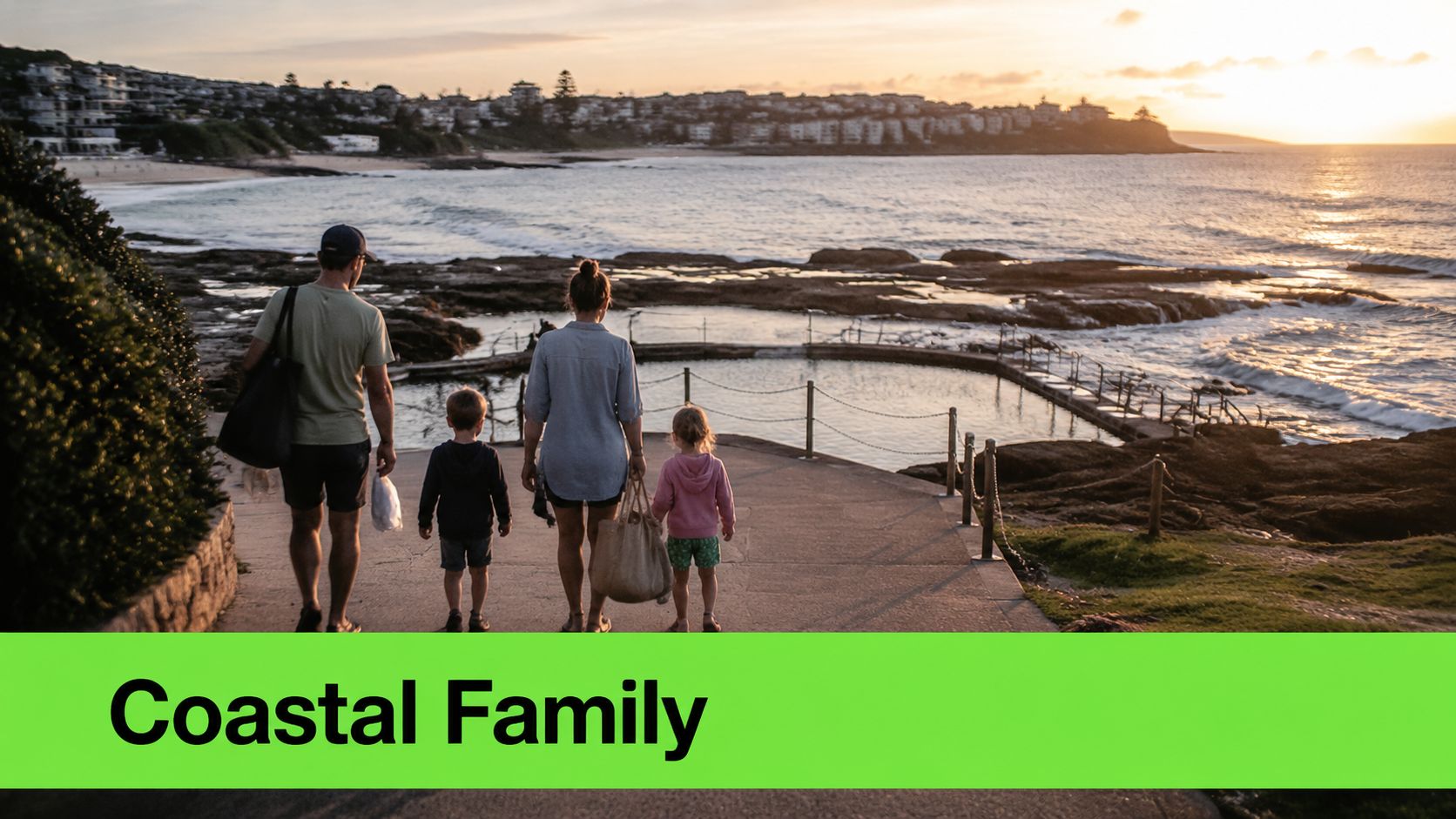
A family finishes breakfast, grabs towels, and walks to the beach before the school day fully begins. That kind of routine explains Coogee better than any property brochure. For some households, the suburb's appeal is not the postcode alone. It is the way the coast can shape an ordinary Tuesday.
That distinction matters. A beachside suburb can look attractive from a distance, but family life is built from repeated patterns. In Coogee, those patterns might include a quick playground stop after school, a coastal walk with a pram, or older children meeting friends in a familiar, active public space. The suburb works well for families who will use those habits often enough to make the higher cost feel justified.
Lifestyle value versus purchase price
The practical choice in Coogee usually comes down to distance from the water. Living right near the foreshore gives you easier access to the beach and more of that holiday-like atmosphere. Buying a little further back often gives a family more financial breathing room while keeping the same suburb, schools, and daily amenities. It works like paying for front-row seats versus sitting a few rows back. You still get the event, but the price difference can be large.
That is why inspections in Coogee need to go beyond a simple question of whether the suburb is desirable. Families should ask how often they will use the beach, whether the walk works with school bags and tired children, and how the home functions on rainy weekdays when the coastal setting matters less. A beautiful address does not automatically solve storage, bedroom layout, parking, or noise.
The broader lesson applies across high-demand family areas. Domain reported that South Canberra, which it ranked highly for families, had a median house price of about $2 million and a median unit price of $890,000 in its coverage of Australia's family-friendly regions. Price and family appeal often rise together.
Coogee suits families who are choosing a lifestyle they expect to use every week, not just admire on weekends.
10. Hawthorn East, Melbourne VIC
A family in Hawthorn East is often buying for a long stretch of life. The question is less "Will this suburb feel exciting?" and more "Will our weekdays run well here in five years?"
That changes how the suburb should be judged. Hawthorn East tends to suit households that want predictability: established streets, reliable school access, familiar shopping strips, and homes that can carry a family from primary school into the teenage years. It appeals to buyers who are planning around routines, not chasing novelty.
A common Hawthorn East move is an upgrade from an apartment or a tighter inner-eastern terrace. The family is usually trying to fix practical problems all at once. One extra bedroom for a second child. A separate study area once homework gets serious. Better parking. Less time spent juggling school drop-offs, sport, and grocery runs.
That is where Hawthorn East earns its place on a family shortlist. It sits close enough to the city to keep commutes manageable, but its value for families usually shows up at ground level: quieter residential pockets, usable parks, and housing stock that often makes more sense for longer household stages than trendier inner-city alternatives.
Relocation guides often point to Canberra for family appeal because of safety, education, and a calmer pace, as noted in this overview of family-friendly places to live in Australia. Hawthorn East offers a similar idea in suburb form. The draw is not constant entertainment. It is a setting that makes ordinary weeks easier.
When you inspect a home here, three details deserve extra attention:
- School access in real life: Check the actual walk or drive at school-run times, not just the catchment on paper.
- Everyday open space: A nearby park matters more when it is close enough for a quick afternoon visit, not just a weekend outing.
- Teenage-proof layout: A home that works for small children can feel cramped later if there is no study nook, second living zone, or private bedroom separation.
That last point gets missed in many suburb roundups. A family home works like a pair of school shoes bought one size ahead. If it only fits today's needs, you may be shopping again sooner than expected. In Hawthorn East, the better buys are often the homes that still make sense when children need independence, quieter study space, and easier transport options on their own.
Top 10 Family-Friendly Suburbs Comparison
A comparison table is useful, but only if it helps with an actual family decision. The practical question is usually simpler: which suburbs are expensive because of lasting family demand, which ones are easier to buy into, and which trade higher entry costs for lifestyle or school access?
To keep this table factually clean, it avoids uncited price bands, growth rates, and rental yield figures. Instead, it compares the parts buyers can verify during a search: competition level, broad price positioning, family fit, and the advantages that tend to matter once daily life starts.
| Suburb | Acquisition Complexity 🔄 | Broad Price Position ⚡ | Family Fit 💡 | Key Advantages ⭐ |
|---|---|---|---|---|
| Mosman, Sydney NSW | Very high. Tight supply and strong competition for family homes. | Premium | Established families prioritising prestige, school access, and harbour lifestyle. | Well-regarded schools, attractive streetscapes, harbour setting, strong long-term owner-occupier appeal. |
| Neutral Bay, Sydney NSW | High. Competitive, but with more variety than Mosman. | Upper-mid to premium | Young families who want a village feel with easier access to the city. | Walkable shopping areas, practical transport links, good mix of apartments and houses. |
| Castlecrag, Sydney NSW | High. Limited stock and planning constraints can narrow choice. | Premium | Families who value privacy, greenery, and distinctive homes. | Leafy setting, architectural character, larger blocks in parts of the suburb, strong community identity. |
| Balwyn, Melbourne VIC | Very high. School-zone demand keeps pressure on quality listings. | Premium | Families making education a central part of the buying decision. | Highly regarded schools, larger family homes, established streets, long-term appeal for owner-occupiers. |
| Bangalow, Byron Bay NSW | Moderate. Smaller market, so choice can be limited at times. | Mid to upper-mid | Families seeking lifestyle change, more space, and a village setting near Byron Bay. | Character homes, local community feel, access to regional lifestyle without being in central Byron. |
| South Yarra, Melbourne VIC | Very high. Demand stays strong for well-located family-suitable properties. | Upper-mid to premium | Households that want inner-city convenience without giving up parks and amenities. | Transport access, shopping and dining, proximity to schools, parks, and cultural amenities. |
| Cremorne, Sydney NSW | Very high. Small, tightly held market. | Premium | Families who want a quieter lower north shore position with good city access. | Boutique village feel, access to schools and parks, attractive harbour-side location. |
| Asheville, Brisbane QLD | Moderate. More accessible than the Sydney and Melbourne premium suburbs listed here. | Mid-range | Growing families looking for more house and land value. | Larger blocks, relative affordability, practical option for buyers balancing budget and space. |
| Coogee, Sydney NSW | Very high. Beachside demand keeps competition intense. | Premium | Families willing to pay more for coastal lifestyle and outdoor living. | Beach access, strong local amenity, active lifestyle appeal, good everyday recreation options. |
| Hawthorn East, Melbourne VIC | Very high. Family homes attract strong school-driven demand. | Premium | Families planning for school years, teenage independence, and long-term liveability. | Well-regarded schools, classic family housing, transport access, established neighbourhood character. |
Source note: This comparison is qualitative editorial analysis based on the suburb characteristics discussed in this article. It does not present current median prices, capital growth, or rental yields. Buyers should confirm market data through current suburb reports, agent guidance, and official state land or sales records before making decisions.
One useful way to read the table is to sort these suburbs into three practical groups. Mosman, Balwyn, Coogee, Cremorne, and Hawthorn East sit in the high-pressure category, where buyers often compete for a narrow slice of family-suitable stock. Neutral Bay and South Yarra suit households that want convenience first, then try to find the best family layout within a denser setting. Bangalow and Asheville make more sense for buyers who are prepared to trade some urban immediacy for space, value, or lifestyle change.
That distinction matters because two suburbs can both be called family-friendly while solving completely different problems. A beachside suburb may improve weekends. A school-focused suburb may make the next ten years easier. A larger-block suburb may give children room to grow without forcing another move in three years.
Final Thoughts
The best places to live in Australia for families rarely come down to a single winner. They come down to fit. One household needs a walkable inner-city suburb because both parents work long hours and time is scarce. Another needs land, a calmer pace, and a budget that won't leave them overstretched. A third is willing to pay more for beach access or a highly regarded school zone because they know they'll use those advantages every week.
That's why broad city rankings are useful, but only to a point. Australia does well overall in family-focused comparisons, and Brisbane's recent ranking strength shows how much buyers value parks, safety, and practical liveability. There's also clear evidence that affordability changes the picture fast. A suburb or region can be excellent for raising children and still be unrealistic for many buyers once housing costs enter the conversation.
The most useful way to approach your search is to think in layers. Start with the city that matches your work, transport needs, and budget pressure. Then narrow to suburbs that support your actual week. School run, childcare, green space, shopping, commute, parking, and how your home might adapt over time. Those are the details that shape family life far more than a suburb's reputation alone.
The examples in this list show that there isn't one model family suburb. Mosman and Coogee appeal for lifestyle and access. Balwyn and Hawthorn East draw school-focused Melbourne buyers. Bangalow suits families who want community and breathing room. Brisbane and its family-oriented suburbs keep attracting attention because they offer a broader liveability story that many households now prioritise.
If you're choosing between several good options, ask the question many listicles skip. Which place still feels like a smart decision after the mortgage, commute, schooling, and daily routine are all included? That's usually where the right answer sits.
If you're buying a family home or investment property and want help weighing suburb quality against real buying conditions, the team at We Are Buyers Agents can help you search, inspect, compare, and negotiate with a clearer strategy. They work with buyers across Sydney and Byron Bay and understand the practical trade-offs families face when choosing where to live.