
Australian buyers aren't treating efficiency as a bonus anymore. They're paying for it. Domain data cited by 28Watt says buyers will pay an average $118,000 premium, or 14.5% more, for energy-efficient houses, and solar panels can add an average of $140,000 to value in Australia (28Watt summarising Domain data).
That changes how a smart buyer should inspect property. Energy efficient home features now affect three things at once: holding costs, tenant appeal, and bargaining power. In Sydney and Byron Bay especially, I'd treat glazing, insulation, orientation, airtightness, and solar as financial line items, not lifestyle extras.
A polished kitchen is easy to spot. Thermal performance isn't. That's where many buyers overpay for homes that look modern but still leak heat, run expensive systems, and need major retrofit work later.
Table of Contents
- Why Energy Efficiency Now Defines Property Value
- The Core Components of an Energy Efficient Home
- Translating Features into Dollars Saved and Value Gained
- A Buyer's Inspection Checklist for Energy Efficiency
- Decoding Australian Energy Ratings and Rebates
- The Investor Angle How to Negotiate with Efficiency
- Your Next Move Making a Smarter Property Investment
Why Energy Efficiency Now Defines Property Value
The old view was simple. Buyers paid for land, location, layout, and cosmetic finish. That's no longer enough. Operating cost has moved into the value conversation, and energy efficient home features now influence what buyers will pay before they've even asked about benchtops or paint colour.
In practice, this shows up during inspections in obvious and subtle ways. A home with double glazing, sensible orientation, insulation, and solar feels quieter, steadier, and cheaper to run. A home without those basics often relies on brute-force heating and cooling, which is expensive and hard to hide once a buyer knows what to look for.
Australian demand confirms the shift. Listings for energy-efficient houses receive 13.8% more views, while energy-efficient units receive 6.5% more interest, according to Domain reporting covered by MPA (MPA on Domain's energy-efficient listings data).
Practical rule: If two properties are similar on land, condition, and location, the one with lower running costs and stronger thermal performance usually deserves deeper analysis, not a quick dismissal as “priced too high”.
This matters even more for investors. Tenants don't always ask for insulation specs. They notice comfort, glare, drafts, and utility bills. Owner-occupiers may call it livability. Investors should call it risk management.
A feature only adds value when it works in the actual building. Solar on a thermally weak house can still leave the occupant with a poor experience. Likewise, expensive glazing won't do enough if the rest of the shell leaks air and the roof space is neglected. The right way to assess efficiency is as a system, then price it like one.
The Core Components of an Energy Efficient Home
Most buyers get overwhelmed because the terminology sounds technical. The easiest way to assess energy efficient home features is to split them into three buckets: the building envelope, the systems and appliances, and the generation and design layer.
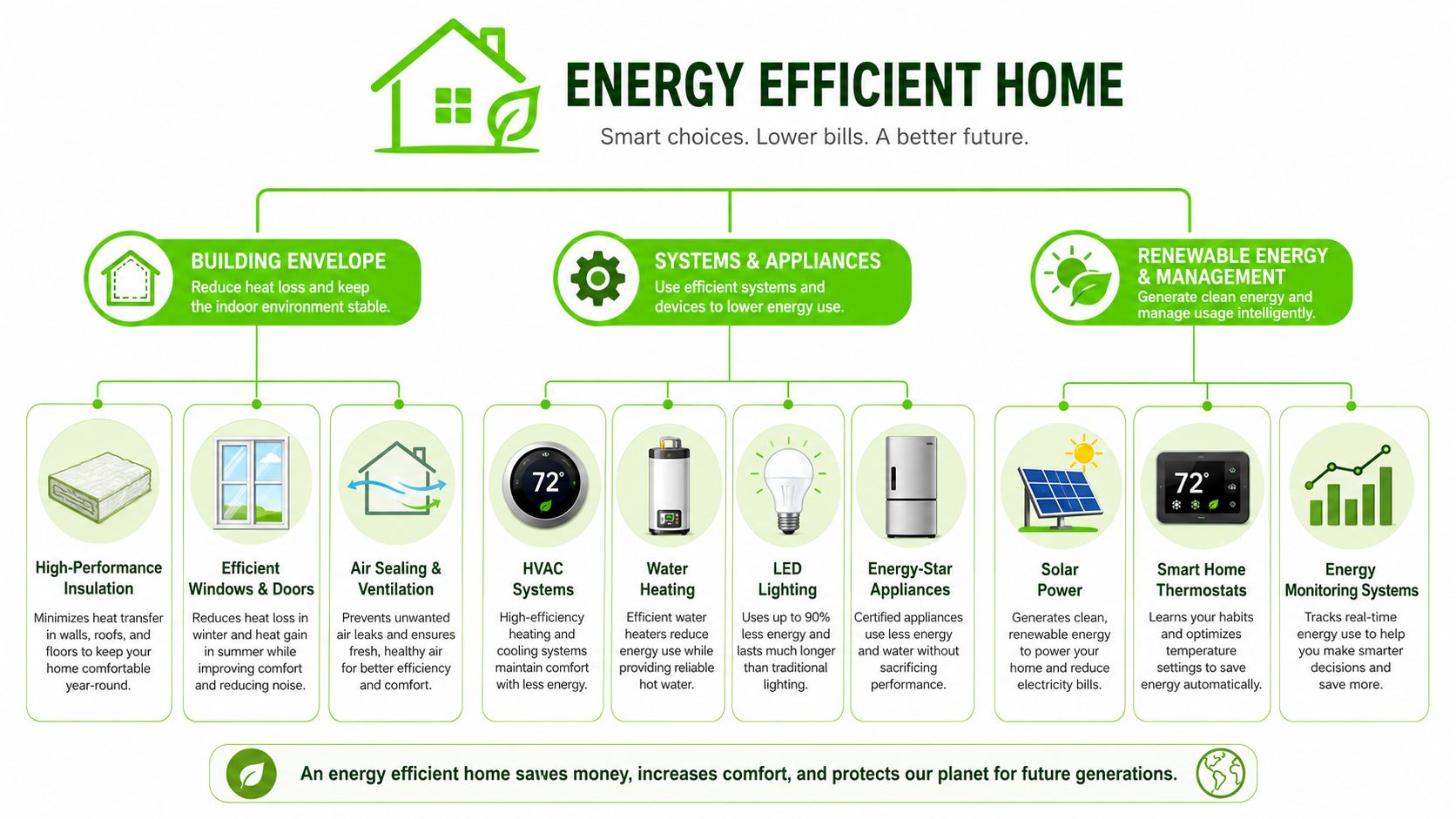
The building envelope does the heavy lifting
The envelope is the shell of the home. Roof, walls, floors, windows, doors, and the gaps between them. If this layer performs badly, everything else works harder and costs more to run.
Insulation is the clearest example. I usually describe it as the thermos effect. A well-insulated home slows heat moving in and out, so indoor temperatures stay more stable. That matters in both summer and winter, and it's why insulation often outperforms flashier upgrades in real-world value.
Some details are easy to miss during an inspection. A continuous insulation layer beneath a concrete slab can prevent heat loss that affects energy use by over 25% in some climate zones, and a tightly sealed thermal envelope can reduce uncontrolled air infiltration by up to 25%, which allows a home to use smaller heating systems (Fox Blocks on core high-performance building details).
Windows are the next checkpoint. Single glazing often means temperature swings, condensation issues, and poor acoustic comfort. Double glazing and better frames improve the shell, but buyers should still check installation quality, seals, and whether west-facing glass is shaded.
If you're planning upgrades after settlement, a practical starting point is this guide on how to improve your home's energy efficiency. It's useful because it frames upgrades as a sequence, not a random shopping list.
Systems and appliances determine running costs
Once the shell is sound, the mechanical side starts to matter more. Heating, cooling, hot water, lighting, and major appliances determine the day-to-day cost profile of the property.
Buyers often get distracted by brand names. The better question is whether the system size and condition suit the home. A compact, efficient system in a tight, well-insulated home is often a better sign than an oversized unit trying to compensate for weak construction.
A few inspection cues help:
- HVAC age and condition: Look for service stickers, duct condition, outdoor unit noise, and whether rooms are evenly conditioned.
- Hot water setup: Check the age, fuel type, pipe insulation, and where the unit sits relative to bathrooms and kitchen.
- Lighting and appliances: LED lighting is now standard in better-performing homes. Older fittings and tired appliances usually signal broader neglect.
- Ventilation quality: In an airtight home, controlled ventilation matters. Stale air, condensation, or mould smells often suggest the house isn't balancing sealing and fresh air well.
A home that feels comfortable without the system blasting all day usually has better fundamentals than one that needs constant mechanical correction.
Generation and passive design add strategic upside
Solar is the headline feature because buyers can see it from the street. It absolutely matters, but it shouldn't be the first thing you rate. Generation works best when demand has already been lowered by a good envelope and efficient systems.
Passive design is the less glamorous winner. Orientation, shading, roof form, and room placement influence how much heat enters and leaves the house before a switch is ever turned on. In the Australian market, north-facing orientation can carry a substantial premium, and that's because it improves both comfort and resale appeal when the design uses it properly.
A well-designed home doesn't fight the climate. It uses eaves, glazing placement, landscaping, and room layout to reduce reliance on machines. That's strategic value because it survives appliance replacement cycles. Panels can be upgraded. Hot water units can be swapped. Good orientation and sensible design stay with the property.
Translating Features into Dollars Saved and Value Gained
Buyers eventually ask the same question. What do these features mean in money terms, not theory?
The answer starts with two levers. First, lower operating cost. Second, higher resale or purchase appeal. Those two don't always move in perfect lockstep, but when both are present, efficiency stops being a lifestyle preference and becomes an investment attribute.
What the premium really means
Energy-efficient rated homes sell for 2.7% more than unrated homes, with higher-rated properties commanding a 3% to 5% premium. Those homes also typically consume 20% to 30% less energy, and proper insulation can reduce energy bills by up to 40% (EcoWatch energy efficiency statistics).
That's the useful lens for buyers. Some features cut bills directly. Others improve saleability. The strongest properties do both. Double glazing, insulation, airtightness, and solar all sit in that crossover zone when they're installed properly and matched to the building.
There's another side to the equation. A home can wear “efficient” as a label while still underperforming in practice. Occupant behaviour can negate 20% to 30% of projected savings in multifamily contexts, which matters for investors buying units where residents may not control all systems or may use them poorly (Fox Blocks on the gap between labels and occupant behaviour).
Buyers should price performance, not marketing. A green label with weak documentation is less valuable than a plain listing backed by solid construction details and sensible running costs.
Cost versus savings table
The table below is useful as a negotiation and triage tool. Where verified Australian installation and annual savings figures aren't available, I've marked them qualitatively rather than inventing numbers.
| Feature | Estimated Upfront Cost (AUD) | Estimated Annual Savings (AUD) | Approximate Payback Period |
|---|---|---|---|
| LED lighting upgrade | Varies by property and fitting type | Lower electricity use qualitatively | Depends on scope |
| Double-glazed windows | Varies widely by window count and frame type | Lower heating and cooling demand qualitatively | Depends on scope |
| Solar panels | Varies by system size and installation | Lower grid electricity use qualitatively | Depends on tariff, usage, and system |
| Insulation upgrade | Varies by roof, wall, or floor access | Can reduce energy bills by up to 40% as noted above | Depends on existing condition |
| Airtightness and sealing works | Varies by leakage points and remediation needed | Lower heating and cooling waste qualitatively | Often shorter when obvious leaks exist |
| Hot water system replacement | Varies by technology and plumbing changes | Lower running costs qualitatively | Depends on usage and existing system |
| Full retrofit of older home | $20,000 to $50,000+ for legacy properties, with uncertain ROI (HUD older homes retrofit gap) | Savings vary by scope | Often uncertain |
The practical takeaway is simple. Buyers should separate cheap cosmetic upgrades, high-return envelope fixes, and deep retrofit projects. They don't belong in the same decision bucket.
A Buyer's Inspection Checklist for Energy Efficiency
Most inefficient homes reveal themselves if you know where to look. You don't need specialist tools to spot many red flags. You need a disciplined walk-through and the confidence to ask for evidence.
Start outside. That's where the house usually tells the truth first.
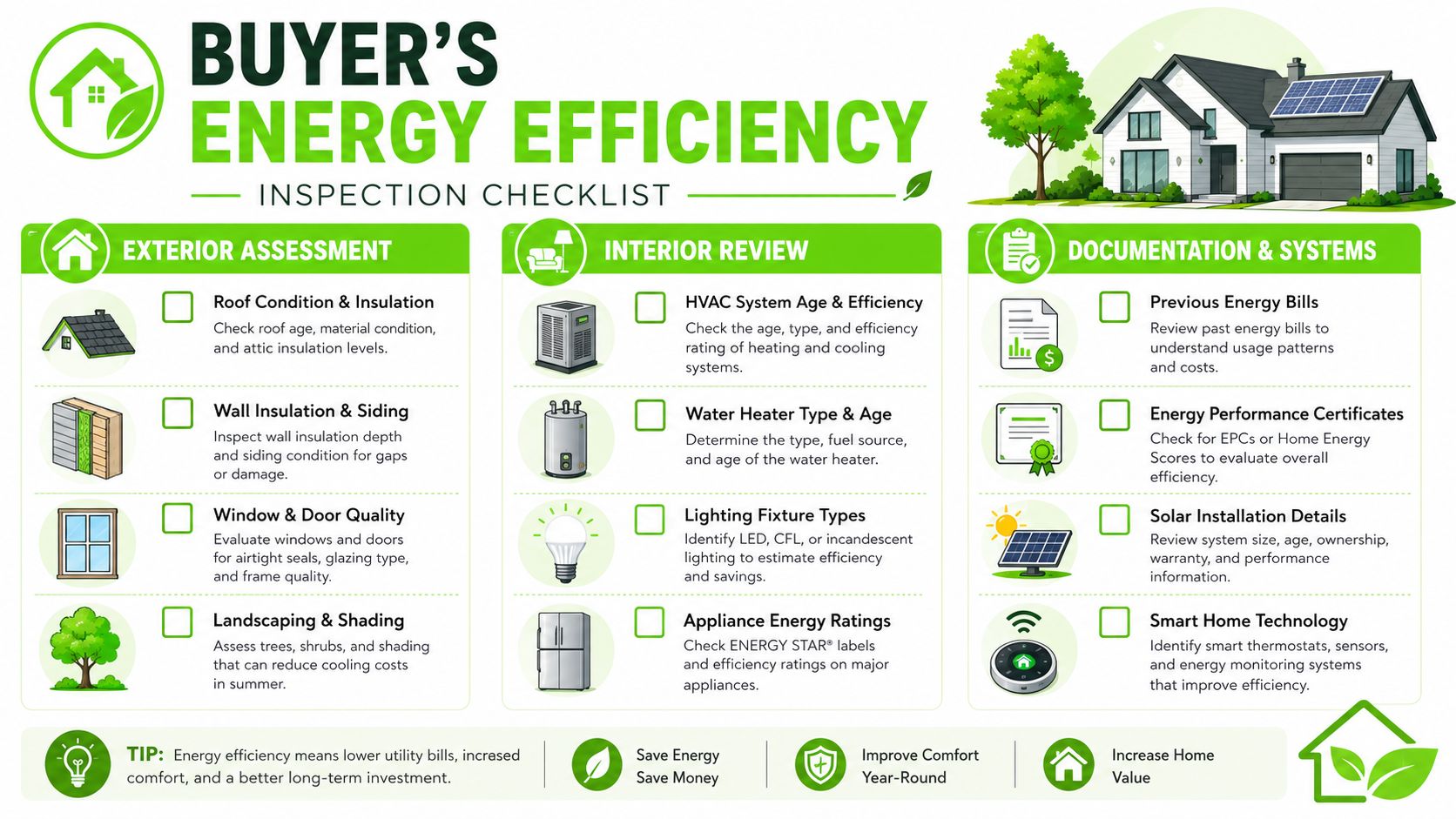
What to check outside
- Roof and ceiling clues: Ask whether roof insulation has been upgraded. A new roof finish means little if the ceiling space is poorly insulated.
- Window type: Check for spacer bars between panes, frame quality, seal condition, and whether large west-facing windows have shading.
- Orientation: Note where the main living room and outdoor areas face. North-facing living zones usually perform better when the design captures winter sun and limits summer glare.
- External shading: Trees, eaves, pergolas, and awnings can help or hinder. Good shade reduces cooling pressure. Poorly placed shade can darken interiors and push occupants toward artificial lighting.
This short video gives a useful visual frame for what buyers should be noticing during a walk-through:
What to check inside
Inside the property, comfort signals matter. If a home feels stuffy, drafty, or acoustically harsh during a mild inspection day, that usually gets worse in peak seasons.
Use a simple room-by-room checklist:
- Entry points and drafts: Stand near doors, windows, and downlights. Feel for air movement. Loose seals usually mean leakage and noise transfer.
- Floor and wall feel: Cold floors, hot west walls, or rooms that vary sharply in temperature often point to weak insulation or poor glazing.
- Heating and cooling systems: Check brand, approximate age, maintenance stickers, and whether vents or split systems are positioned logically.
- Hot water and wet areas: Listen for long delays in hot water arrival and look for pipe routes that suggest heat loss or inefficient layout.
- Condensation and mould signs: Corners, wardrobes, window edges, and bathroom ceilings tell you a lot about ventilation quality.
On-site test: Don't just ask whether a home is insulated. Ask where the insulation is, when it was installed, and whether there's documentation.
For buyers who want a more complete due diligence process, a proper building and pest inspection helps identify defects that can undermine energy performance, including moisture ingress, gaps, ageing seals, and roof space issues.
What to request before you sign
The paperwork often matters more than the sales script. Ask for:
- Recent utility bills if the seller will provide them.
- Solar documentation, including inverter age and warranty records.
- Any rating certificates or compliance documents tied to the build.
- Receipts for major upgrades such as glazing, insulation, or HVAC replacement.
- Maintenance records for air-conditioning and hot water systems.
A seller who can document efficiency improvements gives you a stronger basis to assess value. A seller who can't may still have a good property, but the discount case becomes stronger.
Decoding Australian Energy Ratings and Rebates
Ratings confuse buyers because several systems get mentioned in one conversation. The easiest way to read them is to separate design performance from operational performance.
NatHERS is generally used to assess the thermal performance of a home design. NABERS is generally associated with measured operational performance in buildings. For buyers, the key point isn't memorising acronyms. It's understanding what the rating tells you, what it doesn't tell you, and whether the home's physical features support the claim.
How to read ratings without getting lost in acronyms
A rating isn't a substitute for inspection. It's a starting point.
A strong design rating usually suggests the shell has been considered properly. That might include glazing choices, insulation levels, orientation, and sealing. But the ultimate asset value still depends on build quality, maintenance, and how the systems were executed on site.
That's why I treat ratings as one layer of evidence among several:
- Design evidence: Plans, specifications, and compliance records
- Physical evidence: What's built and visible during inspection
- Operational clues: Comfort, noise, drafts, condensation, and system behaviour
- Upgrade pathway: Whether the home can be improved without major structural cost
What Queensland tells buyers right now
Queensland provides one of the clearest current benchmarks. New residential buildings must achieve a minimum 7-star energy rating for the building shell and a Whole of Home score of at least 60 out of 100. The state says compliance delivers an average annual electricity saving of $185 per year across its climate zones (Queensland residential energy efficiency standards).
That matters well beyond Queensland. It shows where regulation is heading and what buyers will increasingly expect as standard in newer stock. If you're comparing an older dwelling with a new build, this gives you a framework for asking what the older property would need to close the performance gap.
Government-led minimum standards are also pushing houses toward double glazing, floor and wall insulation, and tighter construction, as discussed by Thrivability Matters in its coverage of the shift to high-performance homes (Thrivability Matters on mandatory high-performance housing standards).
Where rebates and efficient hot water fit
Rebates and incentives can soften upgrade costs, but they shouldn't rescue a weak acquisition decision. A poor shell with a rebate attached is still a poor shell.
Hot water is one area where buyers often miss value because the system isn't visually exciting. Yet it affects running cost, upgrade planning, and maintenance. If you're weighing replacement options after purchase, this homeowner's guide to hot water efficiency is a practical reference for comparing what suits an Australian home.
The broader rule is simple. Treat ratings and rebates as supporting evidence. The property still has to stand up physically.
The Investor Angle How to Negotiate with Efficiency
Efficiency isn't just about choosing the right property. It's a tool for arguing price.
I use it in both directions. If a property performs well, strong energy efficient home features can support a confident offer because they reduce future capex risk and improve tenant appeal. If the home performs poorly, the absence of those features becomes a clear basis to negotiate down.
Use strong performance to justify price
A buyer can justify paying more when the efficiency story is complete and documented. That means the shell, systems, and evidence line up. Solar alone isn't enough. Nor is a generic “eco” description in the listing.
The best examples usually include several of these elements working together:
- Credible envelope quality: Double glazing, insulation, shading, and tight seals
- Sensible systems: Modern heating, cooling, and hot water with maintenance records
- Design logic: Good orientation and room placement
- Documentation: Compliance records, warranties, bills, and installation receipts
In those cases, you're not paying for trend language. You're paying for lower future spend and stronger resale positioning.
Use weak performance to push price down
The more common opportunity is the underperforming older property. In such instances, many investors make avoidable mistakes. They buy on character, location, or renovation potential, then discover the efficiency gap is expensive to close.
The retrofit issue is real. Upgrading legacy properties can cost $20,000 to $50,000+, with uncertain ROI, especially when buyers must decide which older features are worth preserving and which should be replaced (HUD on the retrofit gap in older homes).
That number changes the negotiation tone immediately. If a pre-1980s property has single glazing, weak insulation, poor sealing, and dated systems, that's not a minor improvement list. That's a capital works issue.
Use that gap methodically:
- List the missing fundamentals such as insulation, glazing, sealing, or system age.
- Separate cosmetic updates from performance upgrades so the seller can't blur them together.
- Frame future spend as risk, not preference.
- Discount for uncertainty when documentation is absent.
For investors weighing these trade-offs, this advice for property investors is useful as a broader due diligence lens around risk, cash flow, and asset selection.
The strongest negotiation point is often not what the home has. It's what the next owner will have to fix.
A final caution. Older homes sometimes contain climate-smart design features worth preserving, such as overhangs or room placement advantages. Don't assume every old element is obsolete. But don't romanticise them either. Price the upgrade path before you fall in love with the façade.
Your Next Move Making a Smarter Property Investment
A smart property decision now includes energy performance alongside suburb, land, and floor plan. That's the shift. Energy efficient home features affect what you pay, what you spend after settlement, how easy the property is to lease or sell, and how much negotiating power you really have.
The strongest assets usually combine a capable shell, efficient systems, and design choices that suit the local climate. The weaker ones often look fine in photos but hide costly problems in glazing, insulation, sealing, and ageing services. Those are the homes that deserve either a sharper price or a quick pass.
For due diligence, it helps to go beyond the listing and the open-home script. Pull records, inspect system age, ask hard questions about upgrades, and check whether the home's comfort matches the marketing. If you're comparing options and need deeper ownership history, planning context, and title-related detail, property search tax records can be part of a more disciplined evaluation process.
Buyers who understand efficiency don't just buy greener homes. They buy better-positioned assets. In the current Australian market, that's not a niche advantage. It's part of buying well.
If you want expert help assessing running costs, retrofit risk, and bargaining power before you buy, speak with the team at We Are Buyers Agents. They help Sydney and Byron Bay buyers look past presentation and focus on the features that protect value over the long term.